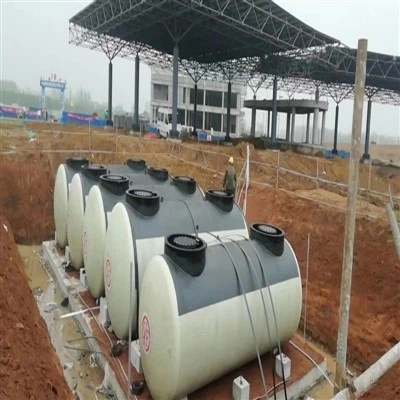
As a seasoned fuel tank supplier, I understand the critical importance of accurately checking the fuel level in the tank. Whether it's for industrial applications, automotive use, or home backup power, knowing the exact amount of fuel in your tank can prevent unexpected downtime, save costs, and ensure smooth operations. In this blog, I'll share some effective methods to check the fuel level in different types of fuel tanks.
Visual Inspection
The simplest and most straightforward method is visual inspection. This is suitable for tanks that have a sight glass or are made of transparent materials. For above - ground tanks, especially smaller ones, a sight glass allows you to directly observe the fuel level. You can easily see if the fuel is at a high, medium, or low level.
However, visual inspection has its limitations. For underground tanks, it's not possible to use this method directly. Also, in some cases, the sight glass might get dirty or damaged, which can affect the accuracy of the reading.
Dipstick Method
The dipstick is a classic tool for checking fuel levels, commonly used in automotive and small - scale fuel storage. To use a dipstick, you first need to locate the dipstick tube on the tank. Remove the dipstick, wipe it clean with a cloth, and then re - insert it fully into the tube. After a few seconds, pull it out again. The fuel level will be marked on the dipstick.
There are clear markings on the dipstick indicating the full and empty levels. By comparing the wet part of the dipstick with these markings, you can determine how much fuel is in the tank. This method is relatively simple and inexpensive, but it requires physical access to the tank and can be a bit messy.
Float Gauges
Float gauges are widely used in various fuel tanks, including Underground Diesel Storage Tank. A float gauge consists of a float that floats on the surface of the fuel. As the fuel level changes, the float moves up or down, and this movement is transferred to a gauge on the outside of the tank.
The gauge usually has a scale that shows the fuel level as a percentage or in volume units. Float gauges are relatively accurate and can provide continuous readings. However, they can be affected by factors such as the shape of the tank and the presence of debris in the fuel, which might cause the float to get stuck.
Ultrasonic Sensors
Ultrasonic sensors are a modern and high - tech solution for checking fuel levels. These sensors work by emitting ultrasonic waves towards the surface of the fuel. The waves bounce back from the fuel surface, and the sensor measures the time it takes for the waves to return. Based on this time measurement, the distance between the sensor and the fuel surface can be calculated, and thus the fuel level in the tank.
One of the main advantages of ultrasonic sensors is that they are non - intrusive. They don't need to be in direct contact with the fuel, which reduces the risk of damage and contamination. They can also be used in tanks of various shapes and sizes, including Underground Diesel Tank. However, environmental factors such as temperature, humidity, and the presence of steam can affect the accuracy of ultrasonic sensors.
Pressure Sensors
Pressure sensors are another option for measuring fuel levels. They work based on the principle that the pressure at the bottom of the tank is proportional to the height of the fuel column. By measuring the pressure at the bottom of the tank, the fuel level can be calculated.
Pressure sensors are reliable and can provide accurate readings. They are especially useful for large - scale fuel storage tanks. However, they need to be properly calibrated to account for factors such as the density of the fuel and the atmospheric pressure.
Electronic Gauging Systems
Electronic gauging systems combine multiple sensors and advanced electronics to provide highly accurate and real - time fuel level readings. These systems often include sensors for temperature, pressure, and level, along with a central control unit that processes the data.
Some electronic gauging systems can also be connected to a remote monitoring system, allowing you to check the fuel level from anywhere. This is very convenient for businesses with multiple fuel tanks or for those who need to keep a close eye on fuel consumption.
Considerations for Different Types of Fuel Tanks
1. Self Bunded Diesel Fuel Tank
Self - bunded diesel fuel tanks are designed with a secondary containment layer to prevent spills. When checking the fuel level in these tanks, you need to ensure that the gauging system is compatible with the tank's design. Some self - bunded tanks may have unique access points or require special sensors to accurately measure the fuel level.
2. Self Bunded Gasoline Tank
Gasoline is a volatile fuel, so when using a fuel level checking method in a self - bunded gasoline tank, safety is of utmost importance. Avoid using methods that can generate sparks, such as electrical sensors in some cases. Visual inspection or dipstick methods might be more suitable if they can be implemented safely.
3. Fuel Storage Tank
Large - scale fuel storage tanks, whether above - ground or underground, often require more sophisticated fuel level checking systems. Electronic gauging systems are commonly used in these tanks to ensure accurate and continuous monitoring. Regular maintenance and calibration of these systems are essential to prevent errors.
Importance of Regular Fuel Level Checks
Regularly checking the fuel level in your tank is not just about knowing how much fuel you have. It can also help you detect potential problems early. For example, if you notice a sudden drop in the fuel level without any corresponding consumption, it could indicate a leak in the tank.
Moreover, by keeping track of the fuel level, you can plan your refueling schedule more efficiently. This can save you money by avoiding last - minute, emergency refueling, which is often more expensive.


Conclusion
Checking the fuel level in the tank is a crucial task that requires careful consideration of the tank type, the available methods, and the specific requirements of your application. As a fuel tank supplier, I can offer a wide range of fuel tanks, along with expert advice on the most suitable fuel level checking systems for your needs.
If you're interested in learning more about our fuel tanks or need assistance in choosing the right fuel level checking method, we're here to help. Contact us to start a discussion about your fuel storage requirements and let's work together to find the best solution for you.
References
- "Fuel Tank Management Handbook" - Industry - leading publication on fuel tank maintenance and management
- Manufacturer's manuals for fuel tanks and related gauging systems