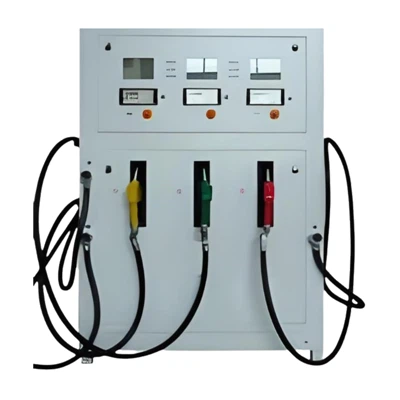
In the realm of energy solutions, Mini Diesel Stations have emerged as a crucial asset for various industries and applications. As a proud supplier of Mini Diesel Stations, I've witnessed firsthand the growing demand for these compact yet powerful energy hubs. One of the most frequently asked questions that I encounter from potential clients is about the power factor of a Mini Diesel Station. In this blog post, I'll delve into the concept of power factor, its significance in the context of Mini Diesel Stations, and how it can impact your operations.
Before we dive into the specifics of power factor in Mini Diesel Stations, let's first understand what power factor is. In an electrical system, power factor is a measure of how effectively electrical power is being converted into useful work output. It is expressed as a ratio between the real power (measured in kilowatts, kW) and the apparent power (measured in kilovolt - amperes, kVA). Mathematically, power factor (PF) is calculated as:


PF = Real Power (kW) / Apparent Power (kVA)
The power factor ranges from 0 to 1. A power factor of 1 (or 100%) indicates that all the electrical power supplied to the system is being used effectively to perform useful work. On the other hand, a lower power factor means that a significant portion of the electrical power is being wasted in the form of reactive power. Reactive power is the power that oscillates between the source and the load without performing any useful work, and it is caused by inductive or capacitive elements in the electrical circuit.
Now, let's explore why power factor is important in a Mini Diesel Station. Mini Diesel Stations are designed to provide a reliable source of electrical power in various settings, such as remote construction sites, small - scale industries, and emergency backup situations. A high power factor in a Mini Diesel Station is essential for several reasons.
Firstly, a high power factor reduces energy losses. When the power factor is low, the electrical system has to carry more current to deliver the same amount of real power. This increased current flow leads to higher resistive losses in the cables, transformers, and other electrical components. By improving the power factor, these losses can be minimized, resulting in reduced energy consumption and lower operating costs.
Secondly, a high power factor enhances the efficiency of the Mini Diesel Station. The generator in a Mini Diesel Station has a limited capacity, which is usually rated in kVA. If the power factor is low, the generator has to supply more apparent power to meet the real power demand. This means that the generator may reach its rated capacity earlier, even though it is not delivering as much useful power as it could. By improving the power factor, the generator can operate more efficiently and deliver more real power within its rated capacity.
Thirdly, a high power factor can help avoid penalties from utility companies. In many regions, utility companies charge their customers based on both real power consumption and apparent power consumption. A low power factor can result in higher electricity bills due to these additional charges. By maintaining a high power factor, users of Mini Diesel Stations can avoid these penalties and save on their energy costs.
In a Mini Diesel Station, the power factor is influenced by several factors. The type of load connected to the station plays a significant role. Inductive loads, such as motors, transformers, and fluorescent lighting, typically have a low power factor. These loads require reactive power to establish and maintain their magnetic fields. Capacitive loads, on the other hand, can improve the power factor by supplying reactive power to offset the inductive reactive power.
The design and configuration of the electrical system in the Mini Diesel Station also affect the power factor. The use of power factor correction equipment, such as capacitors, can help improve the power factor. Capacitors are connected in parallel with the inductive loads to supply the required reactive power locally, reducing the amount of reactive power that has to be drawn from the generator.
Another factor that can influence the power factor is the operating conditions of the Mini Diesel Station. For example, if the generator is operating at a low load, the power factor may be lower compared to when it is operating at a higher load. This is because the losses in the generator and the electrical system are relatively constant, and at low loads, the real power output is reduced, resulting in a lower power factor.
As a supplier of Mini Diesel Stations, we take several measures to ensure a high power factor in our products. Our engineering team carefully selects the components and designs the electrical system to minimize the inductive reactance and maximize the power factor. We also offer power factor correction solutions as an optional feature in our Mini Diesel Stations. These solutions can be customized according to the specific load requirements of our customers.
In addition to the technical aspects, we also provide comprehensive support and training to our customers on power factor management. We understand that many of our clients may not be experts in electrical engineering, so we offer on - site training and remote support to help them optimize the power factor of their Mini Diesel Stations.
If you are considering purchasing a Mini Diesel Station, it is important to choose a supplier who understands the importance of power factor and can provide a product that meets your specific requirements. At our company, we have a wide range of Mini Diesel Stations available, each designed to provide a high - quality and reliable source of electrical power. You can learn more about our Mini Diesel Stations by visiting our website: Mini Diesel Station. We also offer Mini Petrol Stations for those who require a different type of fuel source. You can find more information about our Mini Petrol Stations here: Mini Petrol Station.
We are committed to providing our customers with the best possible products and services. If you have any questions about power factor, Mini Diesel Stations, or any other related topics, please don't hesitate to contact us. Our team of experts is ready to assist you in making the right choice for your power needs. Whether you need a Mini Diesel Station for a short - term project or a long - term installation, we can work with you to find the perfect solution.
In conclusion, power factor is a critical parameter in a Mini Diesel Station. It affects the energy efficiency, operating costs, and overall performance of the station. As a supplier, we are dedicated to ensuring that our Mini Diesel Stations have a high power factor to provide our customers with a reliable and cost - effective source of electrical power. If you are in the market for a Mini Diesel Station, we invite you to reach out to us for a detailed discussion about your requirements and how we can help you optimize your power usage.
References
- Electric Power Systems Fundamentals, by J. Duncan Glover, Mulukutla S. Sarma, and Thomas J. Overbye.
- Electrical Engineering Handbook, edited by Richard C. Dorf.
- Power Factor Correction Handbook, published by a leading electrical engineering association.